A teenage crisis… and a connection
Adolescence is often that moment in life when you want to share everything, explore everything, live everything connected.
But what happens when the connection disappears?
This is precisely the situation staged in the advertisement SFR “The Crisis”, broadcast in September 2011, for the Neufbox.
We discover Tiphaine, a teenager in the midst of a crisis, shouting at her parents because… the Internet has just gone down.
Around her, her bewildered father, her overwhelmed mother, and her little sister — dressed as a fairy — watch the scene, embarrassed.
The phrase “Who is going to tell her that the Internet is down?” then appears on the screen, followed by the logo SFR and the slogan “Totally you”.
A funny, simple advertisement, but above all terribly revealing of the generational relationship to the Internet in the early 2010s.
An advertisement based on the codes of young people
In 2011, having an Internet connection at home was still far from being a given for everyone.
Speeds were inconsistent, outages frequent, and “boxes” gradually became everyday objects.
SFR chooses here to adopt the codes of young people— impatience, exaggeration, need for connection — to create a situation familiar to all families.
But it is not to teenagers that the advertising is directly aimed.
It targets their parents, that is to say the economic decision-makers.
The strategy is subtle: by showing the family chaos caused by a breakdown, SFR primarily promises peace of mind.
And this peace of mind comes at a price: that of a subscription with a “reliable” operator.
This is where the intelligence of the campaign lies.
SFR does not sell a box, but family peace.
A competitive context on the verge of exploding
At the end of 2011, the French telecom market is about to experience a historic upheaval.
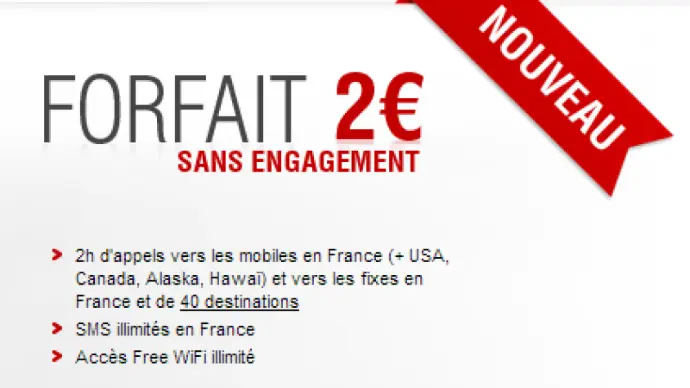
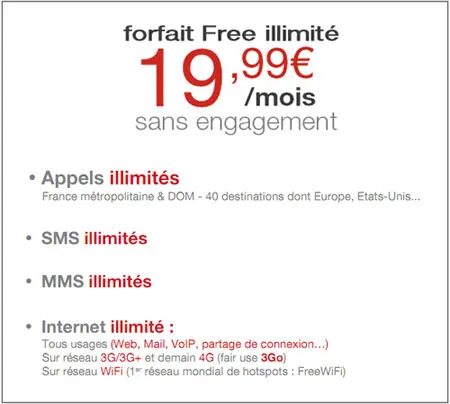
In January 2012, Free Mobile will launch its famous plans at €19.99 and €2, breaking prices and redefining consumer expectations.
SFR, aware of this impending earthquake, adopts a preventive strategy here.
While Free targets the connected youth, SFR speaks to the parents, those who pay the bills.
The message is clear:“Choose a box that guarantees you peace at home.”
An intelligent positioning: target emotional stability rather than price.
The figures confirm the pressure on the market
Between 2011 and 2013, ARCEP data shows a spectacular evolution:
The high and very high speed increased by+5.9 %in one year.
Subscriptions to fibre optics exploded by +37.5 %, reaching over 760,000 households.
And above all, Free attracts more than 7 million subscribers in less than two years, reaching over 10 % of the mobile market.
In the face of this dynamic, the historical players – Orange, Bouygues and SFR – must react.
But each chooses a different path.
SFR focuses on service quality and family closeness, while Free bets everything on price and freedom.
SFR, good advertising… but a service that is out of sync
Creatively, this advertisement is a success.
It is funny, identifiable, and perfectly rooted in the behaviours of the target audience.
However, the promise of reliability made in the ad does not always match the reality experienced by customers.
Many consumers at the time reported frequent breakdowns and a unresponsive customer service.
This gap between the advertising message and the actual experience undermines the brand's credibility.
And this is a fundamental point of service marketing :
Good advertising can attract the customer, but only a positive experience retains them.

The importance of word of mouth and trust
If we analyse SFR's gradual decline in the following years, it is not due to a lack of advertising creativity.
On the contrary, SFR has long produced striking and well-designed campaigns.
But what has been lacking isword of mouth, orword of mouth.
Disappointed customers share their experiences, fueling a negative perception.
And in a market where competition is becoming fierce, thereputationis as decisive a lever as price or technology.
A lesson in marketing strategy
This SFR advertisement “The Crisis” perfectly illustrates the stakes of telecom marketing at the time:
Anticipating market changes, here the arrival of Free Mobile.
Finely segmenting the target, by speaking to parents to attract young people.
Combining emotion and rationality, with family humour but a technical promise.
Aligning the promise and the product, to avoid dissonance between communication and experience.
In other words, SFR understood the context perfectly... but had not yet found the formula to translate it into sustainable loyalty.
A visionary advertisement, a service out of sync
The advertisement SFR Neufbox “The Crisis”remains an excellent case study for students and enthusiasts of marketing and communication.
It shows how a brand can anticipate a disruption (here, the arrival of Free Mobile) and attempt to respond with humour and strategy.
But it also reminds us of an essential truth:
A successful advertisement is not enough if the product or service does not deliver on its promises.
SFR managed to speak to its audience at the right time, but failed to convince them sustainably.
And it is this tension between promise and reality that makes this advertisement a fascinating example of the relationship between communication, customer experience, and trust.