When marketing becomes a social tool
What if travelling by train could make you rich?
This is the somewhat crazy bet made by the Indian railway company in March 2025 in Mumbai, one of the largest metropolises in the world. Faced with a recurring problem — the massive fraud in public transport, where millions of passengers travel without a ticket each year —, the company decided to turn the problem into an opportunity: to reward honesty rather than punish fraud.
From this idea was born the campaign “Lucky Yatra”, an advertising concept combining play, emotion and social behaviour, which would charm international juries, while provoking a debate on the actual effectiveness of this type of marketing strategy.
A strong social context: fraud, a national sport in India
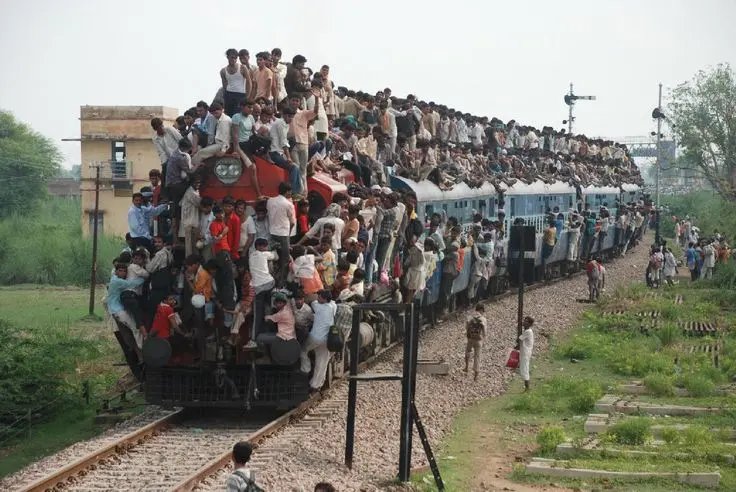
In India, the train is much more than a means of transport — it is a national backbone. Every day, millions of travellers board trains, often in precarious conditions. But with a
poverty rate exceeding 5% and more than 75 million people living in extreme poverty, many simply cannot afford to pay for their ticket. As a result: fraud has become a “national sport.”
Between September 2023 and August 2024,
21.6 million ticketless travellers 21,6 millions de voyageurs sans billet have been identified. And this figure only represents those who got caught…
The consequences are multiple:
overcrowding of carriages,
conflicts between passengers,
financial loss for the railway network,
accident risks (nearly 16,000 deaths related to railway incidents in 2021).
In the face of this situation, punitive campaigns were no longer sufficient. A different, more humane, more engaging approach needed to be found.
Lucky Yatra: turning the ticket into an opportunity
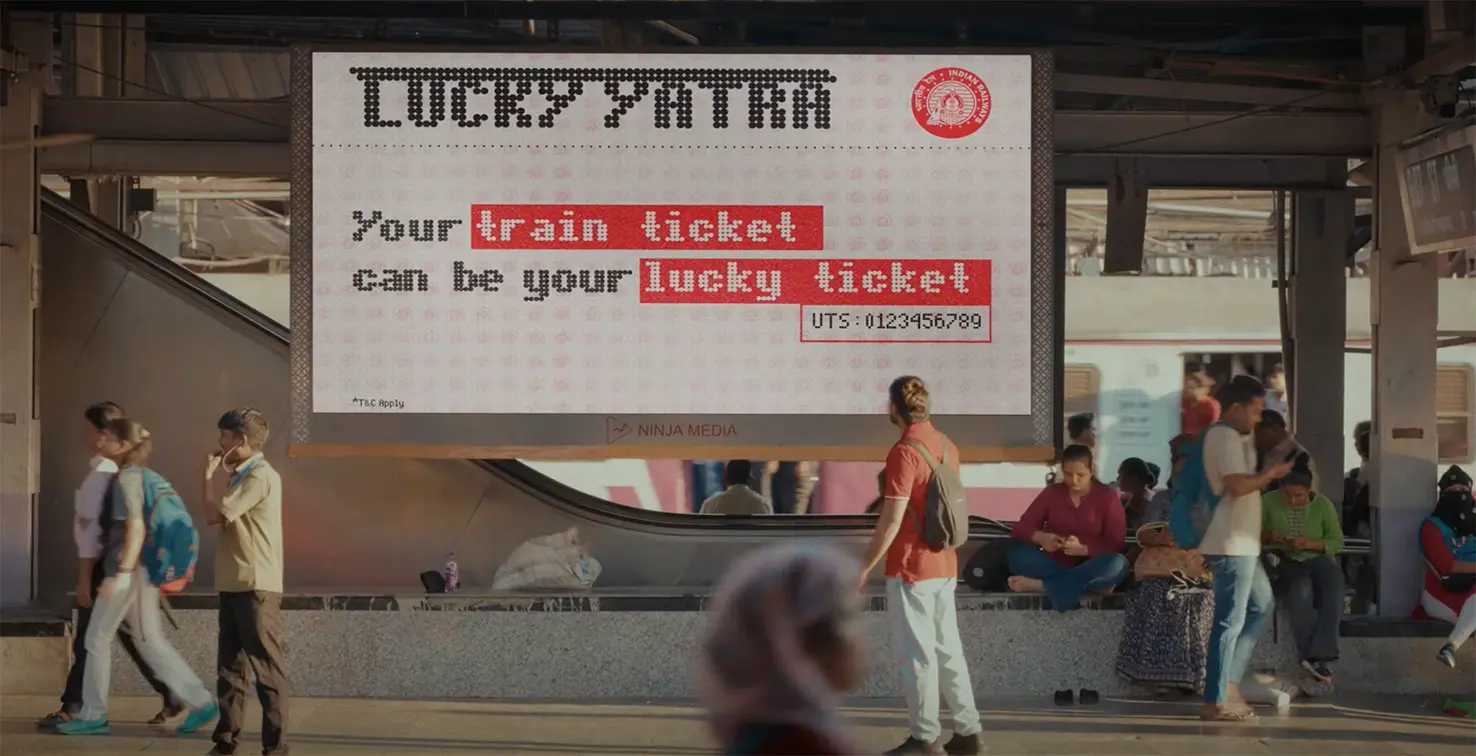
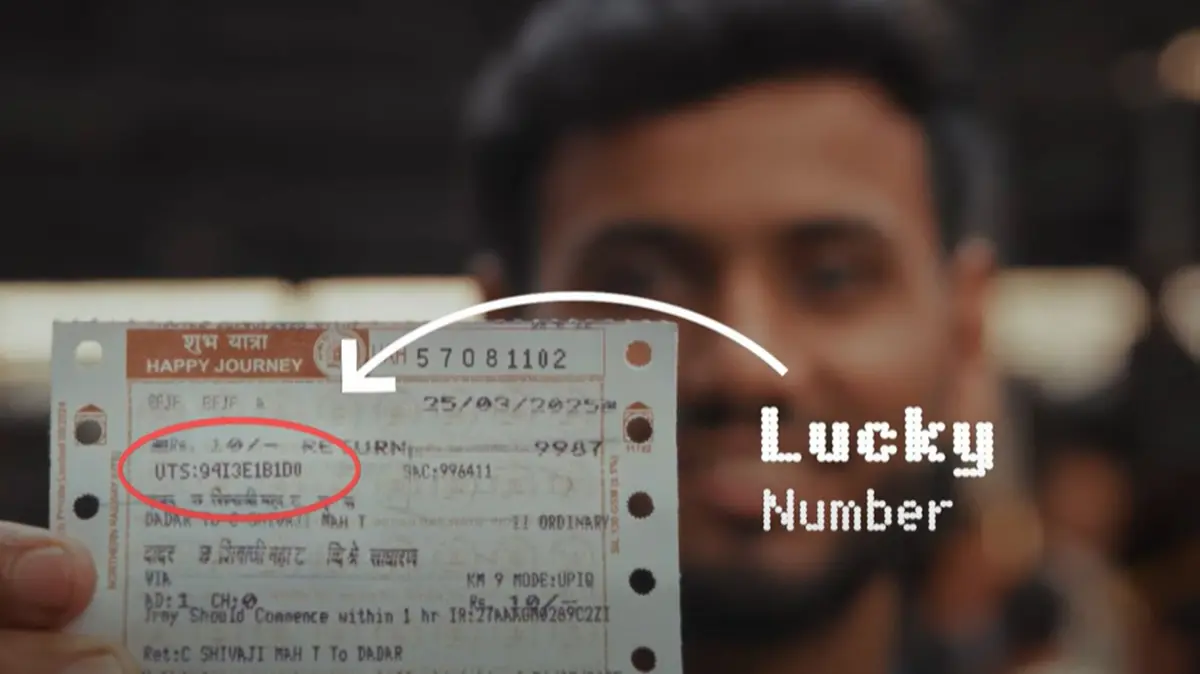
Launched in March 2025, the campaign Lucky Yatra proposed a brilliant idea: each train ticket became a lottery ticket.
A clever way to reward those who pay for their seat, while encouraging ticket purchases.
The concept was simple:
10,000 ₹ to win every day,
50,000 ₹ every week,
each ticket gave a chance to win, by connecting to the site luckyyatra.com.
The idea was not only to combat fraud, but tochange a deep social behaviour: moving from punishment to reward.
A logic similar to nudge marketing, where behaviours are positively influenced without being forced.
An ambitious and omnichannel campaign
The media strategy was broad and well thought out.
For eight weeks, from 20 March to 15 May 2025, the campaign was deployed on:
the stations in Mumbai (OOH advertising),
radio(partnership with Radio Mirchi),
messages on board to trains,
and a strong digital presence with the official website.
The tone of the advertisement is both educational and engaging: a narrator explains the colossal losses caused by fraud, before introducing this fun and beneficial solution for all.
But despite this exemplary staging… the campaign quickly showed its limits.
When marketing theory meets the reality on the ground
On paper, Lucky Yatra seemed perfect: social message, strong creativity, multi-platform execution.
And the financial performance figures are impressive:
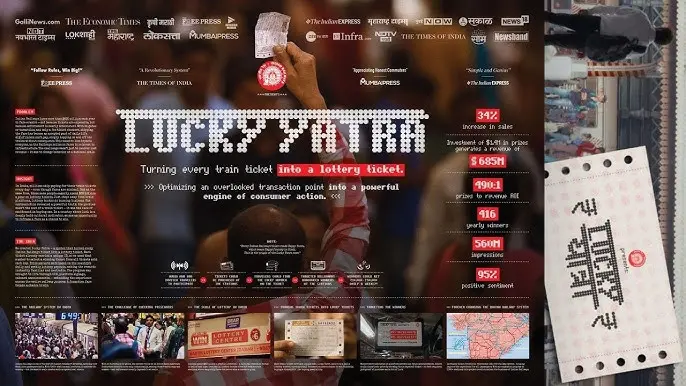
- 1.4 million USD budget for the prizes distributed,
- 685 million USD in revenue generated,
- an estimated ROI of 490:1according to Ads of the World.
Yet, on the ground, the results are much more nuanced.
In eight weeks, only three winners came to claim their prize.
The campaign was prematurely suspended, due to a lack of real engagement.
The reasons for failure: distrust, lack of follow-up and social habits
A distrust of digital
In India, the rise of online scams (lotteries, fake contests, phishing) has made the population particularly cautious.
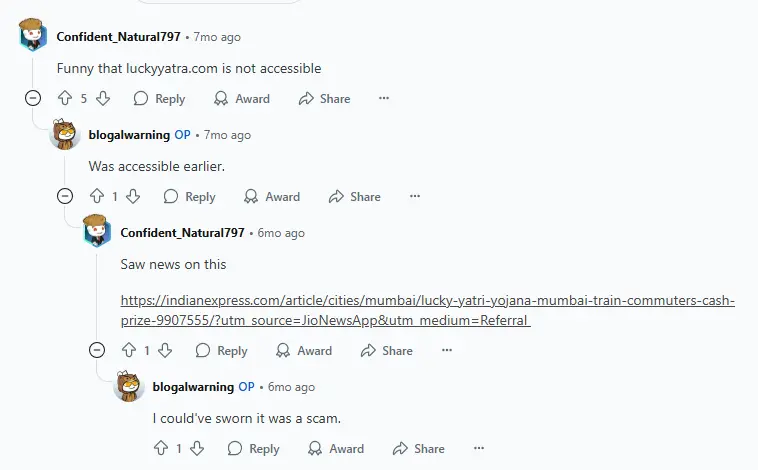
Many internet users have suspected Lucky Yatra of being a scam, particularly because of the website luckyyatra.com — which did not have an official domain (.gov.in).
“The site seems dodgy… it’s strange that it’s not governmental.” – Reddit
This loss of trust has hindered the adoption of the programme, despite the good initial intention.
Rigid consumption habits
Indians love their habits — and changing an ingrained behaviour takes time.
Even though 50 to 60 million people play the lottery regularly, the majority still do so in physical, not online.
Digital lottery users account for barely 10–15% of the market, mainly young men aged 25–34.
In other words, the concept of a “winning digital ticket” was not yet culturally integrated.
A fragile setup
Lack of communication at stations, poorly designed website, absence of clear customer follow-up… all these flaws have reinforced the distance between the brand and the public.
A creative success nonetheless
Despite its concrete failures,Lucky Yatrashone on the international stage.
The campaign won a Grand Prix PR at Cannes Lions 2025, as well as six Gold Lions in the categories:
Outdoor,
Brand Experience & Activation,
Creative Commerce,
Creative Business Transformation,
and Direct Marketing.
It was also shortlisted in seven additional categories, praised for its behavioural transformation and its approach to positive social marketing.
The idea of using play to encourage honesty made an impact in the marketing world.
A lesson for marketers: creativity is not enough.
This campaign perfectly illustrates a major dilemma of modern marketing :
the boundary between award-winning creativity and real impact..
By betting everything on a brilliant idea without sufficiently grounding the execution in the reality on the ground (user behaviour, digital trust, accessibility), the Indian railway company created a campaign more applauded than followed.
And yet, Lucky Yatra remains a fascinating case study for researchers, marketers, and communication students.
It reminds us that a A good idea only becomes powerful when it is based on a fine understanding of the audience— their values, their barriers, their habits.
Conclusion: between innovation and cultural adaptation
Lucky Yatra will remain an iconic campaign: one of marketing that seeks to change society through reward, not punishment.
But it also proves that innovation must always be accompanied by solid market research and close monitoring.
Ultimately, the initiative will have opened an essential debate:
How to reconcile social impact and marketing performance ?
And above all, how to prevent creative campaigns from becoming 'award-bait' without real grounding?