A cult advertisement full of irony
What if saying “yes” to everything could change a life?
The advertisement Hansaplast Ribbed Condoms (2004) plays with this idea, in a spot that is as funny as it is disturbing.
A little boy accumulates the absurdities of everyday life — tattoo, snake, sports car, chainsaw — simply because his mother told him he could.
But the punchline is memorable: in the end, we discover that it is… an advertisement forcondoms.
A strong, humorous and provocative message: “This is what happens when you don’t say no.”
This German campaign, relayed internationally, takes place during a time when HIV prevention and the normalisation of condoms are central public health and communication issues.
When the child becomes a symbol of (too) absolute freedom
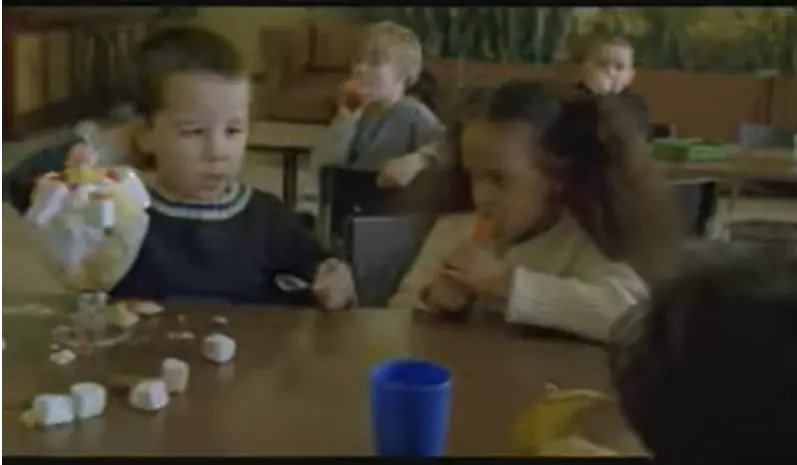
It all begins in aschool canteen, where a little boy treats himself to a monumental ice cream, under the astonished eyes of his classmates.
A few seconds later, he touches a snake, gets a tattoo, drives a convertible, goes skydiving, and ends up in class with… a chainsaw.
In each scene, the same explanation: “Mum said I can!”
This absurd repetition creates an irresistible situational comedy — up to the final scene:
the boy, in his pyjamas, asks if he can put the cat in the washing machine.
And his mother's voice, off-screen, says again “yes”...
Then the logo appears Hansaplast Ribbed Condoms.
A mischievous reminder: some consequences can be avoided.
The normalisation of condoms in the 2000s
To understand the relevance of this advertisement, one must delve back into the early 2000s.
At that time, France and Europe were engaged in a media and cultural fight against AIDS and STIs.
2002: Operational launch of INPES (National Institute for Prevention and Health Education).
2003: Creation of the World AIDS Day, on 1st December.
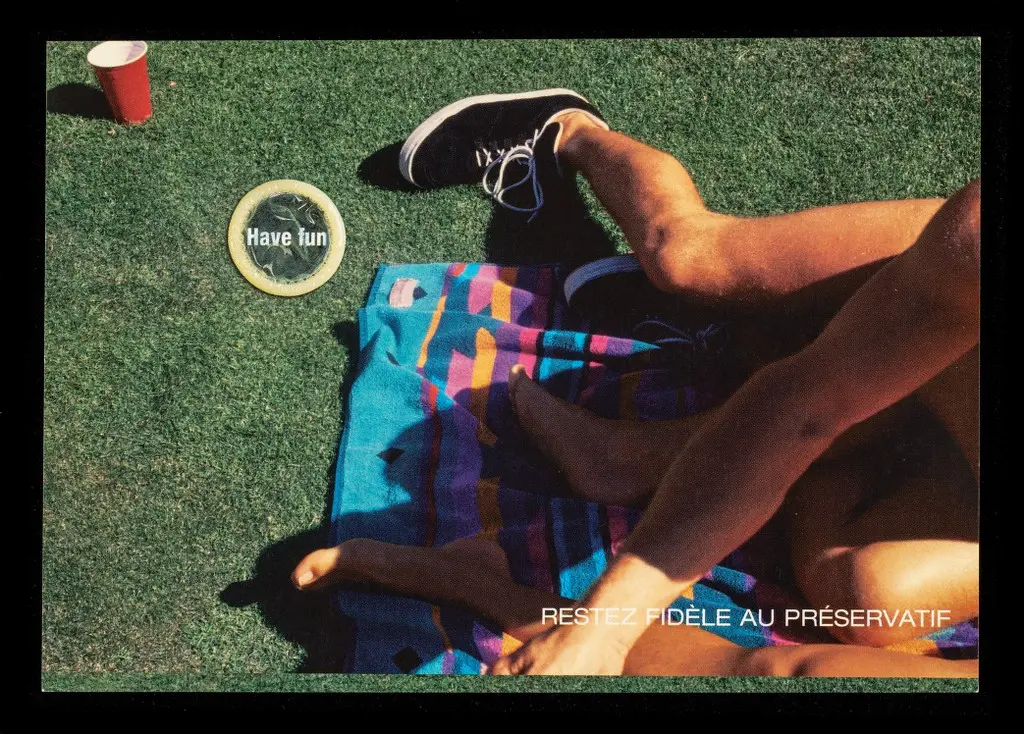
2004: New national slogan:“Stay true to the condom”.
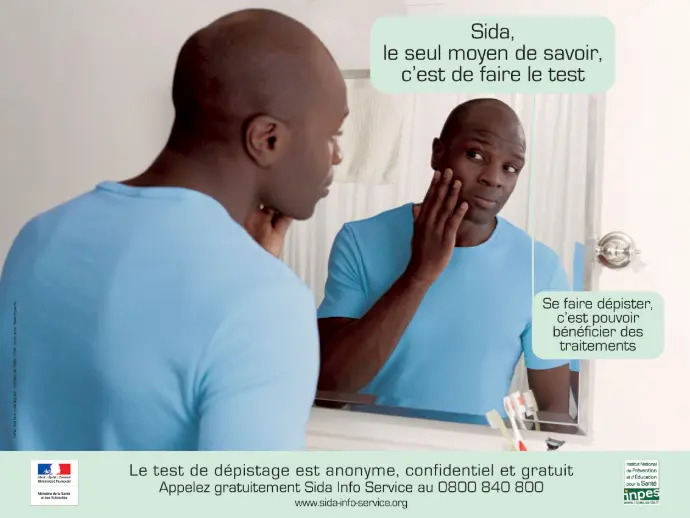
2005: Campaign focused on testing:“The testing is anonymous, confidential and free.”
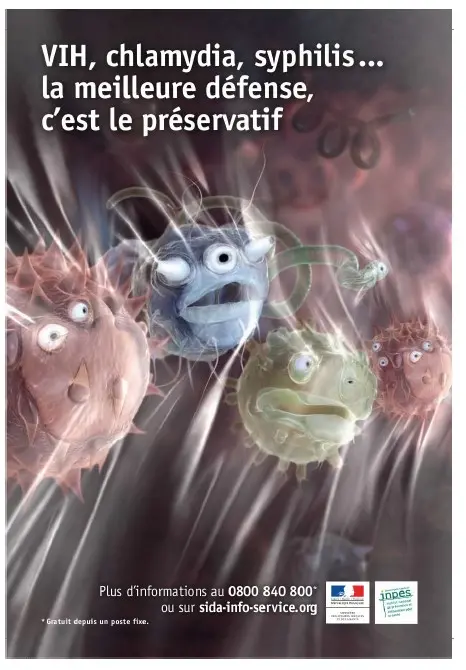
In this climate, brands have a role to play: to de-dramatise the purchase of condoms and to normalise it.
The Hansaplast campaign fits perfectly into this trend, adopting a light and humorous tone, far from anxiety-inducing messages.
Hansaplast: a serious brand that dares to be humorous
Founded in 1922 by the group Beiersdorf (the same as Nivea), Hansaplast is mainly known for its first aid products: plasters, adhesive bandages, antiseptic sprays…
But the brand has also ventured into the condom market, betting on its image of medical reliability and German quality.
In 2004, the French condom market is dominated by four players:
Durex(35% market share)
Manix(24.5%)
Hansaplast(21%)
Intimy(20%)
Hansaplast's objective is to strengthen its brand awareness and gain visibility against Durex and Manix.
The chosen tone? Humour, but also a twist.
A risky bet for a brand associated with medical care, but one that has made an impression.
A brilliant creative idea… but invisible branding
If this advertisement has become iconic, it is primarily due to its memorable ending and its flawless execution.
However, in terms of pure marketing, it suffers from a major flaw:
The brand only appears at the end, briefly, without any visual anchoring in the spot.
No mention of Hansaplast before the final logo.
No product placement in the decor.
As a result, many viewers thought it was an ad.Durex— you yourself highlight this, and it is revealing.
An advertisement, no matter how brilliant, does not fulfil its mission if the brand is not remembered.
The principle of '7 exposures to the brand' (a classic advertising rule) is not respected here.
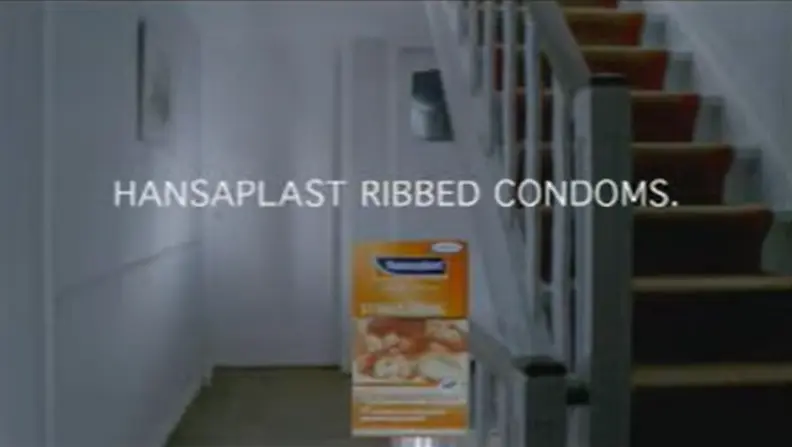
The effectiveness and reception of the Hansaplast advertisement.
Awards and professional recognition.
Epica Awards 2004: categoryToiletries and Health Care.
Eurobest 2004: categoryToiletries and OTC Pharmacy.
The advertisement is also referenced on Culture Pub, which cites it as an example of boldness and creativity in health communication.
Public reactions.
On forums like Koreus, Culture Pub or Doctissimo, the advertisement makes people laugh, sometimes shocks, but leaves no one indifferent.
Internet users talk about“cult ad”, “brilliant and offbeat”, “daring for a brand of plasters”.
The implicit slogan —“this is what happens when you don’t say no”— creates an ending that is both funny and educational.
A masterpiece of storytelling… without brand anchoring.
In essence, the advertisement is anarrative gem :
a simple yet impactful storyline,
a memorable twist,
a tone perfectly balanced between humour and prevention.
But in terms of form, it illustrates acommon strategic error :
where the creation overshadows the brand.
Result: excellent message retention… but alow attribution to Hansaplast..
This is probably one of the reasons why the brand has graduallywith drawn from the French market for condoms.
What marketers can take away from this
is to combine creativity and branding.
An advertisement should not only be beautiful: it must reinforce the brand..
Think multi-channel visibility.
In 2004, the lack of internet limited the search for ads: without a visible logo, it was impossible to find Hansaplast.
Measure performance.
A brand awareness study would have revealed confusion between brands and allowed for strategy adjustment.
Stay consistent with the DNA.
Hansaplast, a serious medical brand, could have linked humour and reliability (e.g.: “Tested reliability, guaranteed pleasure”).
Between creative boldness and branding lesson
The advertisement“Mum said I can”remains a masterpiece of humorous communication, capable of conveying a strong message about parental and sexual responsibility..
But it also shows that a cult ad does not guarantee a brand's commercial success.
Hansaplast managed to make people laugh, but not necessarily to sell.
A valuable lesson for all communicators:
Humour and creativity must always serve the brand, not mask it.