What if happiness came down to a simple choice?
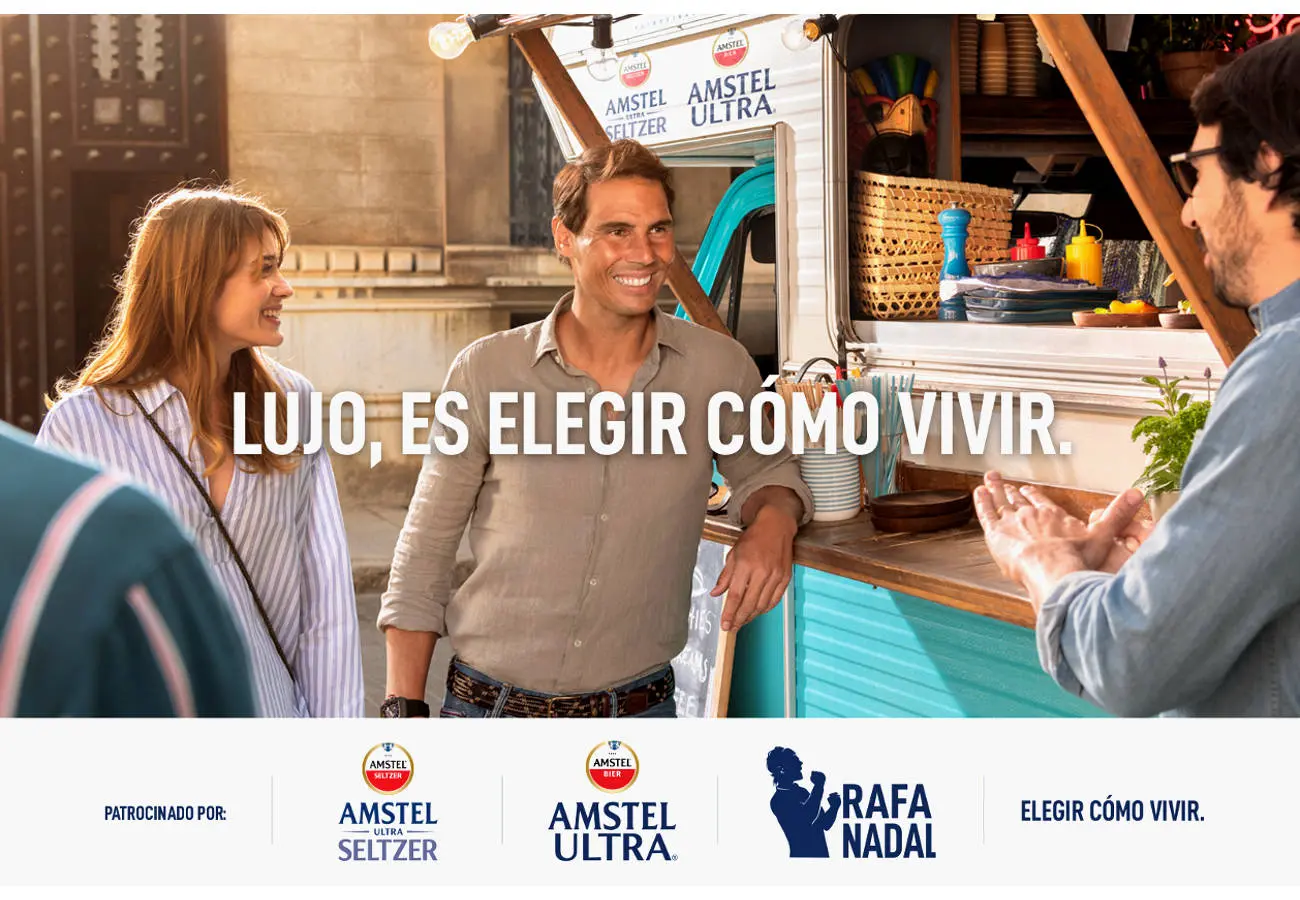
This is the question raised by Amstel Ultra, the light beer from the Heineken, through a Spanish advertisement broadcast in 2023 and featuring tennis icon Rafael Nadal.
Far from the stadiums and the spotlight, the brand here offers a serene vision of life, focused on balance, simplicity and the freedom to choose one's own pace.
But behind these peaceful images, this campaign hides a subtle marketing strategy: repositioning Amstel in the well-being and controlled pleasure segment, while redefining its identity between locality, authenticity and modernity.
A universal message: choose your own life
The advertisement opens with bright shots: Nadal, no longer a champion but a simple man, strolls on a beach, laughs with friends, shares a meal.
The tone is calm, the light golden, the staging minimalist.
We are far from the competitive storytelling of usual sports advertisements — here, everything breathes relaxation, friendliness and authenticity.
Nadal's voiceover, soft and thoughtful, carries the key message:
“Cuando dejas de compararte, descubres lo que te hace único”
(“When you stop comparing yourself, you discover what makes you unique.”)
A simple yet powerful philosophy of life: life is not a competition, and well-being comes from self-acceptance.
From a marketing perspective, it’s brilliant: Amstel moves away from the cliché of festive, masculine beer to address a broader audience — urban, active, and aware of their lifestyle.

Rafael Nadal, an ambassador consistent with the brand values
The choice of Rafael Nadal is not trivial.
An elite athlete, known for his rigor and humility, he embodies both performance and personal balance.
He symbolizes the gentle discipline: that of an accomplished man who also knows how to slow down.
For Amstel Ultra, it’s a strategic boon.
Rather than associating beer with partying or excess, the brand connects it to a healthier vision: reasonable pleasure, integrated into a balanced lifestyle.
This coherence between product, ambassador, and message reinforces the credibility of the campaign.

A unique positioning: the beer of well-being
Amstel Ultra is not just any beer.
Low in calories, reduced in carbohydrates, with a moderate alcohol content, it positions itself as a compromise between taste pleasure and personal well-being.
The advertising message perfectly conveys this promise:
- Drinking a beer can be part of a healthy lifestyle.
- Enjoying does not mean giving up control.
In terms of marketing positioning, this campaign illustrates a strong market trend:
the shift from“drinking to escape”to“drinking to savour”.
A transformation from hedonistic pleasure to balanced pleasure.
A turning point in beer communication
Traditionally, beer advertisements are associated with celebration, friends, sport, and masculinity.
But Amstel Ultra chooses a different path.
Its campaign “Que Buena Vida” (“What a beautiful life”) moves away from classic codes to talk about introspection, calm, and simple moments.
It is a break in tone, but also in the emotional role of the product.
Beer is no longer a symbol of power or social belonging, but a discreet companion of personal well-being.
This shift transforms Amstel Ultra into anaspirational brand: a brand that does not sell a product, but a way of being.
A local and international dimension: the smart rebranding of Amstel
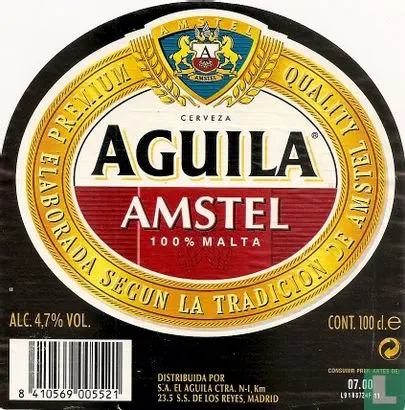
The story of Amstel in Spain deserves attention.
Formerly known as Aguila, this Spanish beer was acquired by Heineken, and then gradually renamed Amstel Aguila, before becoming simply Amstel. tout court.
But to succeed in this rebranding, the brand had to maintain a strong emotional connection with the Spanish public.
The campaign with Nadal contributes brilliantly to this:
It reaffirms the local roots(filmed in Spain, in Spanish, with a national figure).
While projecting an international image, consistent with the identity of the Heineken group.
The result: a brand that is both global and close, capable of speaking to the Spanish consumer without losing its global aura.
A well-calibrated emotional storytelling
Emotion is at the heart of this advertisement.
Scenes of everyday life evoke nostalgia, simplicity, and the joy of existing without comparison.
One perceives a gentle jealousy, a universal feeling: the desire to have what the other has.
But the narrative quickly reminds us that everyone has something unique.
This is the whole challenge of the emotional storytelling: to create an intimate connection between the viewer and the brand.
It is no longer an advertisement about beer, but a story about self-acceptance.
And this is what gives it strength: the product becomes a reflection of an emotion, not the other way around.
An effective multi-channel communication strategy
The “Que Buena Vida” campaign was broadcast across several channels:
Television spots to reach a wide audience,
Digital advertisements to engage connected young adults,
Outdoor advertising to enhance local visibility.
This multi-platform deployment has allowed Amstel Ultra to anchor its message over time and strengthen its spontaneous awareness.
Each touchpoint extends the same emotion: calm, sunshine, nature, authenticity.
A rare coherence in beverage marketing.

From branding to a sense of belonging
Behind its softness, this advertisement hides a formidable marketing mechanism.
It does not seek to provoke an immediate purchase, but to shape a lasting mental image :
of a healthy, elegant, and balanced beer.
This emotional branding strategy aims to:
Create long-term brand preference.
Strengthen loyalty through identification.
Differentiate Amstel Ultra from its competitors (notably Heineken and Estrella).
In other words, the consumer does not just buy a beer.
They buy a philosophy of life: that of quiet pleasure.
Conclusion: a lesson in modern marketing
The advertisement Amstel Ultra with Rafael Nadal is much more than a television spot.
It is a lesson in emotional communication and brand repositioning.
By choosing simplicity, sincerity, and well-being as pillars, Amstel Ultra stands out in a world often saturated with noise and clichés.
- It redefines the place of beer in society.
- It connects an international brand to a local culture.
- And it shows that the true luxury, today, is to live at your own pace.