Fiat and the challenge of the “world car”
In September 2000, Fiat aired an astonishingly simple yet remarkably effective advertisement in South Africa for the Fiat Palio, a model designed for emerging markets.
In a world where every advertisement aims to be spectacular, this minimalist campaign plays on the themes of closeness, emotion, and identification.
But behind this seemingly innocuous scene — a cyclist placing a hand on a car — lies a true lesson in international marketing: how to adapt a global product to a local audience.
A minimalist advertisement but rich in meaning.
The scene is mundane, almost daily:
A cyclist pedals alongside a blue Fiat Palio. The driver looks at him, intrigued.
A second cyclist arrives, also placing a hand on the car.
The light turns green, the cyclists continue, and the car drives on.
The screen goes black.
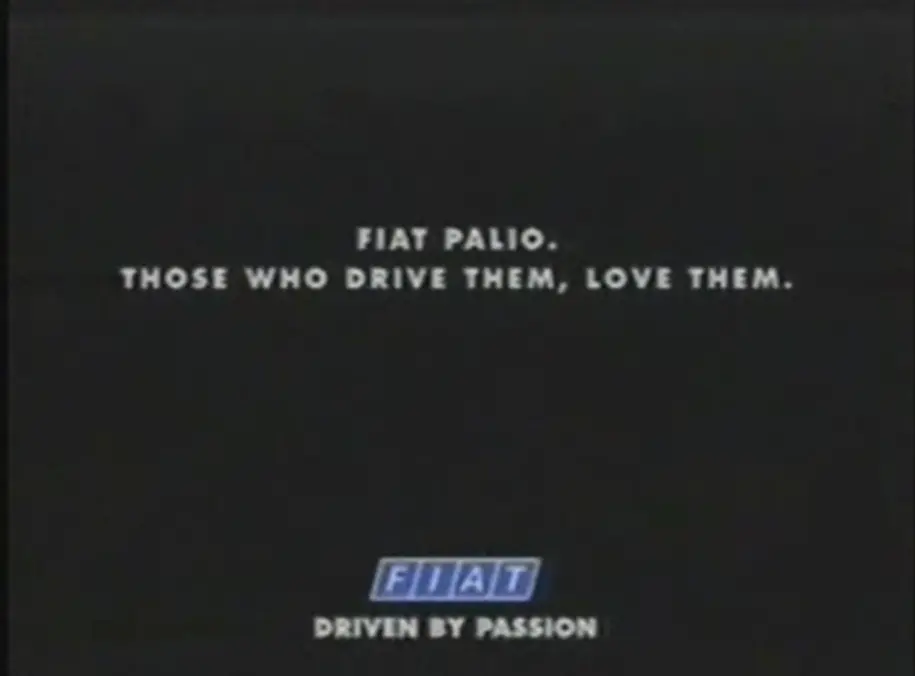
Then the slogan appears:
“Fiat Palio. Those who drive it, love it.”
and the tagline:
“Fiat. Driven by passion.”
A short, simple, yet powerful phrase: the Fiat Palio is not a car you buy, it’s a car you love.
This emotion of “emotional ownership” is at the heart of the campaign's storytelling.
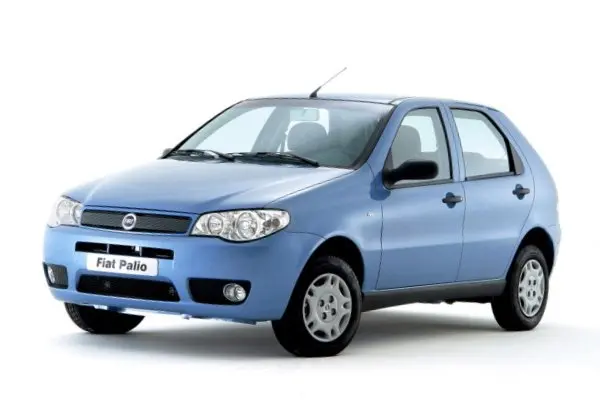
The Fiat Palio: a global car for emerging markets.
If you have never heard of the Fiat Palio, that's normal.
This model has never been sold in Western Europe on a large scale.
The Palio was designed as a “world car”, meaning a car manufactured and marketed internationally, primarily in developing countries.
Fiat wanted a robust, economical car that was easy to produce locally and suited to the realities of very different markets.
It has thus been produced in Brazil, Argentina, India, Turkey, China, Russia, Morocco and South Africa.
It was even built under licence in North Koreaunder the name of Pyonghwa Hwiparam.
This strategy relied on a single modular platform, also used for the Fiat Siena (saloon), the Fiat Palio Weekend (estate), the Fiat Strada (pick-up) and the Fiat Palio Adventure (light SUV).

An advertisement designed for a specific market.
The South African campaign was not aimed at making the Fiat brand shine.
It was primarily aimed at making people love the Palio itself.
The ad does not talk about technology, performance, or even price. It talks about emotional attachment..
The slogan “Those who drive it, love it” directly targets an audience of young urban adults, offirst-time buyers, or even young families looking for a reliable, affordable and endearing car.
The implicit message:
“If you love your car, you will love the Palio.”
By focusing on the relationship between the driver and their car, Fiat aims to humanise the product and create a sense of identification..
The viewer should think:“This scene could be me.”
Local marketing, different advertisements depending on the countries
One of the most fascinating aspects of the Fiat Palio campaign is its cultural adaptation.
Each market had its own advertisement, reflecting local values and expectations:
Italy: a sportier tone, with a nod to Ferrari and the world of Formula 1.
India: a speed and seduction-focused approach, where the Palio competes with a high-speed train.
South Africa: a more “human” advertisement, focused on the everyday, empathy and emotional connection.
Brazil: the “Palio Adventure” version highlights the robustness and freedom, with a 4x4 crossing a tropical jungle.
Russia: a surprising storytelling where a man comes out of prison and finds his Palio, a symbol of regained freedom.
Each version conveys the same central message — the Palio as an accessible and beloved car — but with a tone adapted to the local culture and the lifestyle of the target audience.
It is an excellent example of marketing glocalisation: think global, act local.
A product advertisement above all
Unlike some brand-focused campaigns, here the objective is purely product.
Fiat is not looking to strengthen its image as an Italian brand, but tosell a concrete carto a targeted audience.
The Palio was meant to appeal to a very specific segment: pragmatic, young buyers, often making their first car purchase.
The challenge is to create desire without complexity, by playing on emotional identification.
The advertisement does not promise a dream, it promises the reality of a car that you love to drive every day.
Solid results in emerging markets
Between 2000 and 2004, the Fiat Palio and its sedan version Siena performed well in South Africa, with nearly 30,000 units sold, of which 20,000 were for the hatchback version.
This represented about 2% of the total South African market, a modest but satisfactory figure for an entry-level model.
Globally, Fiat has sold between 8 and 9 million units of the Palio and its variants.
Brazil has remained the main market (nearly 3 million units), followed by Latin America, Asia and Africa. These figures demonstrate that, even without massive campaigns or colossal budgets, well-targeted and culturally adapted advertising can generate real sales.
A lesson in international marketing strategy
This Fiat Palio campaign perfectly illustrates the logic oflocalised marketing. :
Understanding the target market,
Adapting the advertising message to the culture,
Valuing the product rather than the brand,
Creating an emotional connection with the consumer.
Fiat was not trying to “impose” a universal Italian identity, but to speak the language of each country.
This explains the longevity of the model and its success in very different economic contexts.
Loving the car, loving the market.
The South African advertisement for the Fiat Palio shows that it is not always necessary to have a big idea or a huge budget to make an impact.
A simple scene, a clear message, and the right emotion can be enough.
Fiat understood that the love of the car is a universal language, but it expresses itself differently according to cultures.
By adapting to its markets, the brand has managed to create a emotional closeness that has transformed an affordable city car into a symbol of attachment and pride.